Description
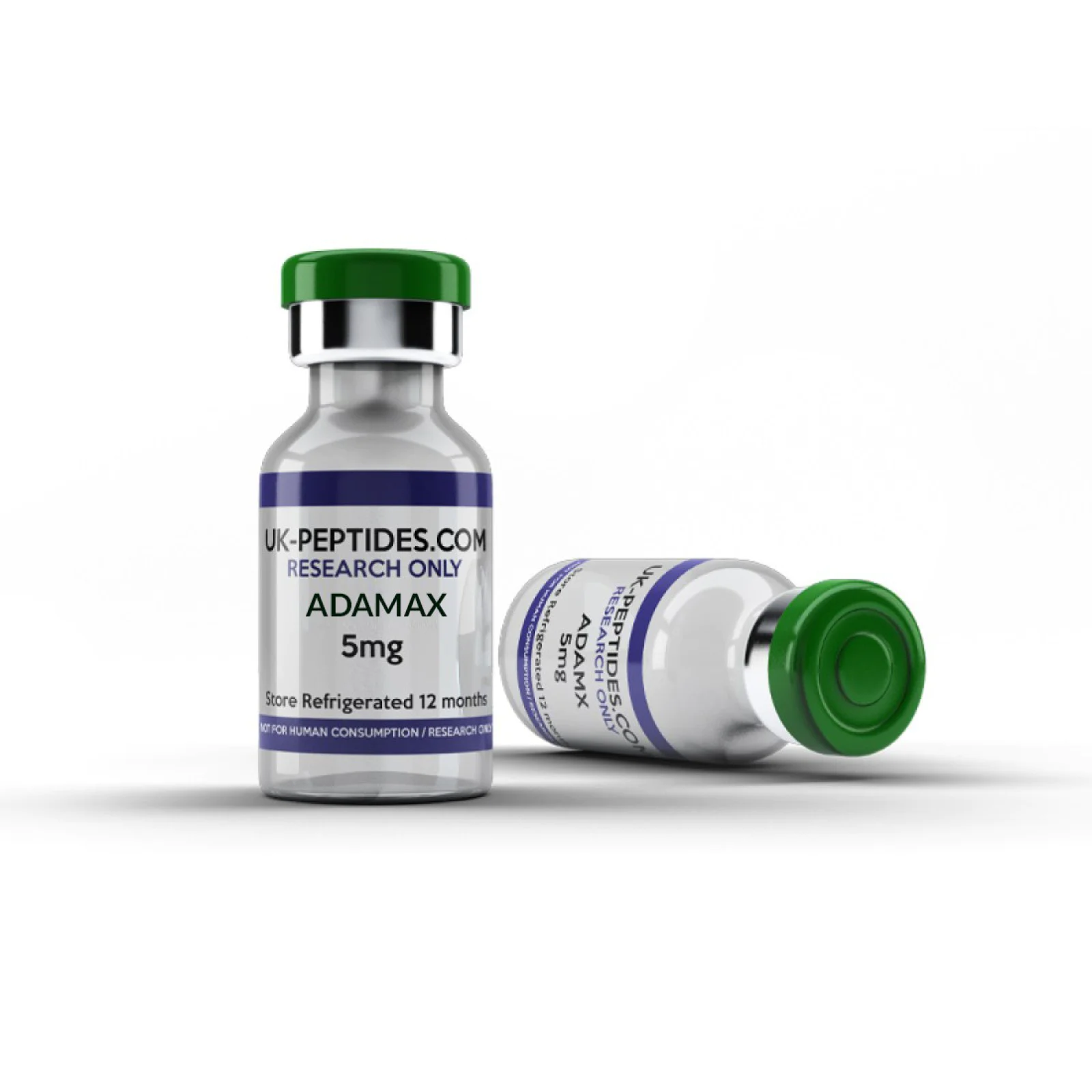
Adamax Peptide 5mg: The Definitive Guide to This Premium Research Compound
In advanced neuroscience and molecular biology, researchers constantly seek high-purity, stable compounds to evaluate complex cellular signaling and neurobiological mechanisms. If you are looking to source a high-stability, laboratory-grade compound, you can find the premium Adamax Peptide 5mg available for purchase to support your next experimental protocol. Developed specifically for in vitro and in vivo laboratory modeling, this synthetic peptide represents a significant structural evolution over traditional reference compounds, offering enhanced resistance to enzymatic degradation and superior stability during long-term analytical tracking.
This comprehensive guide breaks down the structural design, chemical specifications, research applications, and exact handling requirements of the Adamax peptide formulation.
What is Adamax Peptide? Structural Engineering & Design
Adamax is a premium-grade research compound specifically engineered to evaluate peptide stability, cellular communications, and signaling interactions within controlled neural environments. To understand the utility of Adamax in scientific environments, it is necessary to examine its chemical modification process.
The compound is structurally derived from an N-acetyl Semax base. In its basic synthetic architecture, standard neuropeptides are highly susceptible to rapid breakdown by endogenous peptidases when introduced to biological mediums. To overcome this limitation and give researchers a longer window of observation, the peptide structure undergoes two primary synthetic modifications:
-
N-Terminal Acetylation: Adding an acetyl group to the N-terminus significantly improves the compound’s overall structural durability, reducing its vulnerability to aminopeptidase breakdown.
-
C-Terminal Adamantyl Capping: The peptide is capped with an adamantyl group (a rigid, cross-linked, diamondoid hydrocarbon structure). This bulky, lipophilic group creates a steric barrier that protects the peptide backbone from carboxypeptidases while altering its lipophilicity profile in experimental mediums.
While some historical laboratory catalogs occasionally list this family of compounds under alternative cross-references such as N-Acetyl Selank, structural chemists classify Adamax via its unique Semax-derived diamondoid structure to maintain exact research consistency.
Adamax Peptide 5mg Chemical Specifications
To maintain strict compliance with global laboratory standards, every batch of Adamax undergoes rigorous analysis to ensure uniformity, structural purity, and analytical precision. The fundamental technical properties are outlined in the reference matrix below:
| Parameter |
Specification Details |
| Product Name |
ADAMAX 5mg |
| Catalogue Number |
ADA5-024 |
| Molecular Formula |
$C_{22}H_{52}N_{16}O_{6}$ |
| Molecular Weight |
$1032.24 \text{ g/mol}$ |
| Physical Form |
Lyophilized solid (White crystalline cake) |
| Purity Rating |
Verified $\ge 98\%$ via HPLC analysis |
| Format |
Sterile glass vacuum-sealed vial |
The solid, lyophilized (freeze-dried) state is ideal for research environments. By removing moisture from the compound without destabilizing its delicate peptide bonds, lyophilization ensures that the material maintains chemical integrity during international shipping, temperature fluctuations, and long-term storage.
Core Research Applications in Modern Neuroscience
Scientists investigate Adamax peptide benefits across an array of specialized experimental models. Because its modified structure limits rapid enzymatic degradation, it serves as an excellent reference material for extended biological tracking.
1. Peptide Stability and Kinetic Modeling
One of the primary goals of analyzing Adamax is mapping out how structural additions affect a peptide’s half-life. By running comparative degradation assays against unmodified parent chains, researchers can measure exactly how effectively N-terminal acetylation and adamantyl capping resist enzymatic breakdown. These insights help guide future designs for highly resilient peptide structures.
2. Neurological Signaling and Pathways
In cellular cultures, researchers use Adamax to observe downstream changes in neurobiological pathways. Studies focus on how the compound interacts with cell membranes, its effect on cellular communication networks, and whether its lipophilic modifications change how deeply it distributes into experimental neural tissues.
3. Cellular Communication and Synaptic Dynamics
By evaluating molecular signaling cascades under precise laboratory conditions, scientists can document how cells communicate when exposed to stable peptide configurations. These trials help researchers analyze baseline receptor binding kinetics and track the long-term changes that occur in controlled environments.
Laboratory Reconstitution, Storage, and Handling Guidelines
Because synthetic peptides feature delicate tertiary bonds, strictly following proper handling protocols is essential to achieve consistent, reproducible results.
Reconstitution Protocols
Before introducing the compound to an assay, it must be carefully transitioned from its lyophilized state into a liquid solution.
-
Approved Diluents: Reconstitution must be carried out using laboratory-grade Bacteriostatic Water (0.9% benzyl alcohol) to prevent microbial growth, or standard sterile water for injection, depending on the constraints of your study.
-
Mechanical Stress Warning: Never shake or aggressively agitate a reconstituted vial. Rapid movement can shear the peptide’s delicate structure, rendering the solution useless. Instead, slowly express the fluid down the inside glass wall of the vial, then gently swirl the container in a smooth, circular motion until the lyophilized powder completely dissolves into a clear, transparent solution.
Storage Parameters
-
Lyophilized State: Keep the un-reconstituted vial in a cool, dry environment. For long-term storage, keep the vacuum-sealed vial frozen at -20°C to prevent any baseline structural degradation.
-
Reconstituted State: Once liquid is introduced, the solution must be stored under immediate refrigeration at 2°C to 8°C. For maximum efficacy and to prevent structural decay, reconstituted solutions should ideally be used within 14 to 21 days.
Why Choose UK-Peptides Ltd for Advanced Laboratory Research Materials
When conducting high-level scientific research, the reliability of your data depends entirely on the purity of your raw materials. UK-Peptides Ltd supplies top-tier, laboratory-grade research materials backed by rigorous quality control protocols.
By working directly with manufacturing facilities, we ensure that every batch of Adamax exhibits unmatched uniformity and batch-to-batch chemical precision. Our catalog features an array of supporting research materials to streamline your setup:
-
Essential Diluents: Ensure pristine reconstitution by pairing your order with high-purity Bacteriostatic Water or specialized Acetic Acid solutions.
-
Laboratory Hardware: Stock up on essential Sterile Vials to maintain a sterile, contamination-free workspace during dilution and storage splits.
-
Diverse Compound Testing: Expand your research scope by examining other specialized cellular signaling chains, such as our verified ACE-031 reference series.
Choosing a trusted UK-based supplier ensures clear, transparent documentation, reliable delivery timelines, and access to premium research materials designed to meet demanding scientific benchmarks.
Verification and Safety Disclaimer
Strict Regulatory Notice: Adamax is explicitly produced, labeled, and sold exclusively for in vitro laboratory research and diagnostic evaluation. This product is not a medicine, food product, or supplement. Under no circumstances should this compound be used for human consumption, clinical trials, or agricultural applications. Misuse of this material can result in severe laboratory accidents or legal penalties.
Frequently Asked Questions
What is the exact difference between Semax and Adamax?
While Semax serves as the primary structural blueprint, Adamax features two distinct structural additions: an N-acetyl group and an adamantyl cap. These synthetic modifications make Adamax significantly more lipophilic and stable against enzymatic degradation, allowing for longer window lengths during research tracking.
How should the lyophilized powder look upon arrival?
The compound normally arrives as a compact, white crystalline cake or powder inside a sealed glass vial. If the powder shifts during transport and looks slightly broken up, its chemical integrity remains perfectly secure as long as the protective vacuum seal is intact.
Can Adamax be mixed with other research peptides?
Mixing multiple peptides in a single vial during storage is not recommended, as it can cause unpredictable cross-reactions or accelerate structural breakdown. Reconstitute each compound independently using dedicated, sterile solutions.

Reviews
There are no reviews yet